
Cold forming
Product for simulation cold forming processes with tool deformation control
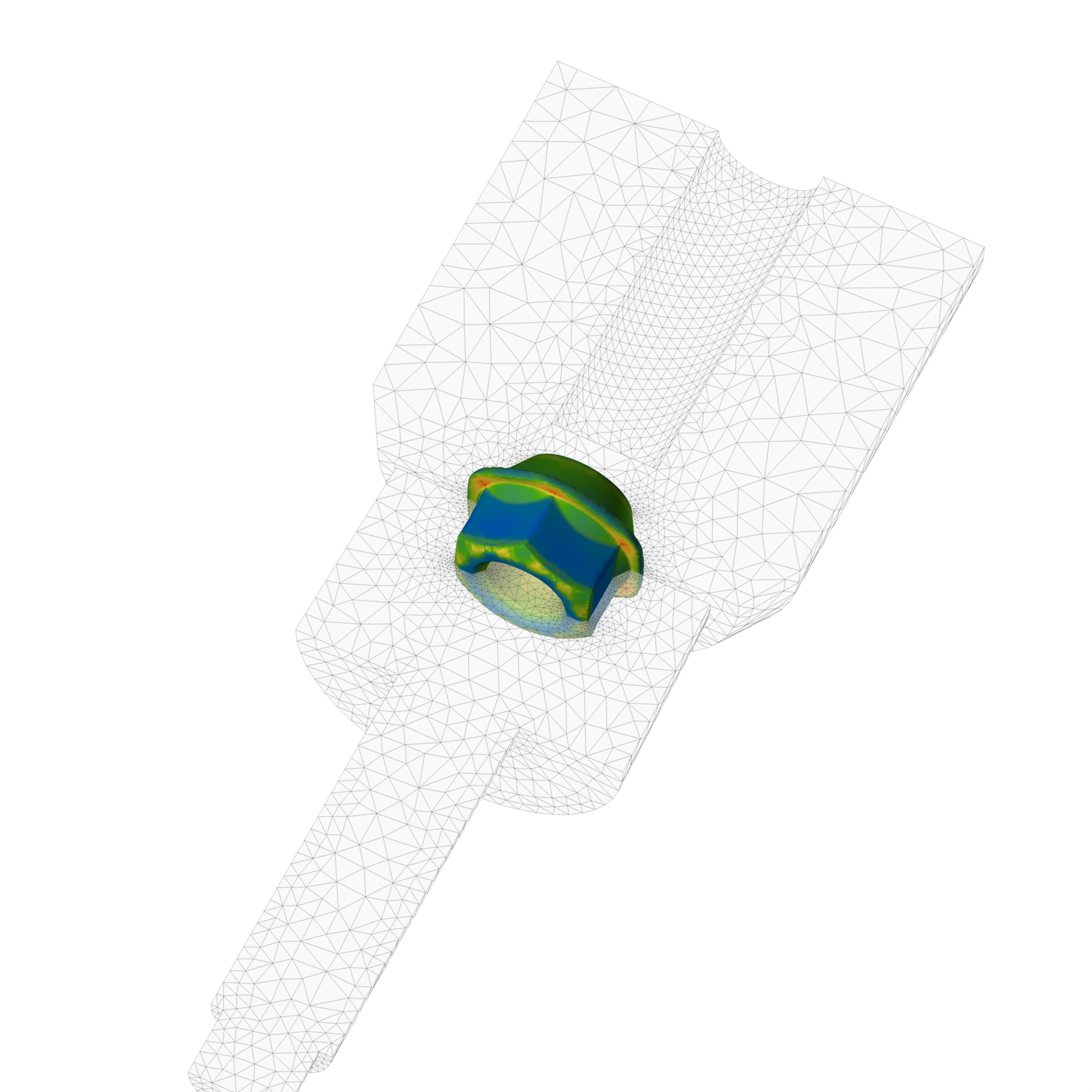
As opposed to hot forging, cold forming technologies yield a precise high-quality shape that reduces or eliminates the need for machining of the forged part. These are the main reasons to use cold forming technologies in technologies such as orbital forming, cold forging and cold upsetting of metalware (nuts, screws), and cold thread rolling.
Special materials are used for cold forging that allows cold deformation without fracture.
To simulate cold forming accurately it is necessary to use rheological models of materials that were tested at cold forging temperatures (in general 20 – 400 degrees Celsius).
To evaluate fracture defects in cold forming simulations it is possible to implement criteria such as Cockcroft-Latham, V.L. Kolmogorov, Wierzbicki, Del, Johnson & Cook, McClintock, Rice and Tracy, V.A. Ogorodnikov, Yu.G. Kalpin in QForm.
It is very important to take elastic deformation of the tool into account in cold forging processes because has a very big influence on the shape of the forged part.